
Mistakes Buyers Make With Hilton Head Condos
Buying a Hilton Head condo can look simple online, but the details matter more than most buyers realize.
The pictures may look great.
The price may seem reasonable.
The beach may appear close.
But with Hilton Head condos and villas, a good purchase is not just about liking the unit. Buyers also need to understand the building, the regime fees, rental rules, financing options, insurance exposure, condition, view, beach access, parking, and long-term ownership costs.
That is where a lot of buyers make mistakes.
Hilton Head is not a generic condo market. A Forest Beach condo, Sea Pines villa, Palmetto Dunes villa, Shipyard villa, Folly Field condo, and inland villa can all come with different buyer expectations, rental appeal, rules, fees, and resale considerations.
The goal is not to scare buyers away.
The goal is to help them slow down, ask better questions, and avoid getting surprised after they are already emotionally attached to the property.
Mistake 1: Buying Only Based on Price
The lowest-priced condo is not always the best deal.
Sometimes a condo is priced lower because it needs updates. Sometimes the building has higher fees. Sometimes financing may be harder. Sometimes the rental rules are more restrictive. Sometimes the view, parking, stairs, access, or building condition limits the buyer pool.
That does not mean lower-priced condos are bad.
It means buyers need to understand why the price is lower.
On Hilton Head, two condos can look similar online but have very different ownership stories once you compare:
- Location
- Beach access
- View
- Building condition
- Renovation level
- Regime fees
- Rental history
- Rental rules
- Insurance structure
- Financing options
- Assessment history
- Parking and elevator access
A cheaper condo that needs major updates, has high fees, and limited financing may not be cheaper in the long run.
Mistake 2: Assuming Short-Term Rentals Are Allowed
This is one of the biggest mistakes buyers make.
A buyer may see a condo on Hilton Head and assume they can rent it on Airbnb, VRBO, or through a local rental company.
That assumption can be dangerous.
Short-term rental rules can involve multiple layers:
- Town of Hilton Head rules
- Business license requirements
- Short-term rental permit requirements
- HOA or POA rules
- Condo regime rules
- Building-specific restrictions
- Minimum rental periods
- Parking rules
- Guest rules
- Pet rules
- Occupancy rules
A condo being located near the beach does not automatically mean short-term rentals are allowed.
A property having rental history does not automatically mean the same rental use will work for the next buyer.
A community being popular with vacationers does not automatically mean every unit inside that community has the same rules.
If rental income matters to the purchase, the buyer should verify the rules before making assumptions. The exact condo, building, regime, and current governing documents matter.
Mistake 3: Confusing Oceanfront With Ocean View
Oceanfront and ocean view are not the same thing.
A condo can be in an oceanfront building and still not have a direct ocean view.
A unit may face the parking lot, courtyard, pool, lagoon, side angle, trees, dunes, or another building.
That does not make it a bad property.
It just changes the value story.
Buyers should be careful with wording like:
- Oceanfront
- Ocean view
- Ocean-oriented
- Near-ocean
- Walk-to-beach
- Beach access
- Across from the beach
Each phrase means something different.
For real estate value, the actual experience matters. Can you see the ocean from inside the unit? From the balcony? Is it a direct view or a filtered view? Is the building oceanfront but the unit interior-facing? How easy is the beach route?
Buyers should not rely only on headline wording. They should verify the actual view, route, and access.
Mistake 4: Ignoring Regime Fees
Regime fees can change the entire affordability picture.
A buyer may compare two condos by purchase price and think one is clearly better. But if one has much higher monthly or quarterly fees, the long-term cost may look very different.
Regime fees may help cover things like exterior maintenance, insurance, landscaping, pools, elevators, pest control, trash, water, cable, internet, common areas, reserves, security, or other shared expenses.
But every regime is different.
Buyers should review what the fee includes, what it does not include, whether there have been recent increases, whether there are known assessments, and whether the building has future repair needs.
A higher fee is not automatically bad if it supports a well-maintained building and reduces owner responsibility.
A lower fee is not automatically good if the property has deferred maintenance, thin reserves, or future assessment risk.
The key is understanding what the fee actually buys.
Mistake 5: Skipping the Financing Conversation Early
Not every Hilton Head condo is equally easy to finance.
Some condos may have factors that affect loan options, such as rental structure, commercial components, owner-occupancy mix, insurance, litigation, reserves, building condition, or condo-warrantability issues.
This matters because a buyer may fall in love with a condo, write an offer, and then find out later that their lender has concerns.
That can waste time and create frustration.
Before getting too far into a Hilton Head condo search, buyers should talk with a lender who understands resort, villa, and condo-style ownership in markets like Hilton Head.
Cash buyers still need due diligence, but financed buyers need to be especially careful. The question is not just, “Can I afford the payment?”
The better question is, “Can this specific condo be financed the way I plan to buy it?”
Mistake 6: Underestimating Renovation Costs
A dated condo can be a good opportunity, but buyers should be realistic.
Renovating a Hilton Head condo is not always as simple as updating a regular house. Buyers may need to consider building rules, contractor access, elevator access, parking, noise restrictions, delivery logistics, flooring requirements, plumbing rules, electrical limitations, insurance, permits, rental downtime, and approval processes.
A cosmetic update may be manageable.
A full renovation can become a bigger project than expected.
This matters even more if the buyer is purchasing for rental use. A dated condo may need new furnishings, flooring, paint, appliances, kitchen updates, bathroom updates, lighting, decor, mattresses, window treatments, and rental-ready supplies before it can compete well.
The right renovation can improve enjoyment, rental appeal, and resale positioning.
But buyers should estimate the real cost before assuming a dated unit is automatically a bargain.
Mistake 7: Not Reviewing Rules Early Enough
Rules matter on Hilton Head.
Buyers should not wait until the last minute to understand how a condo can actually be used.
Depending on the property, buyers may need to review:
- Rental restrictions
- Pet rules
- Owner-use rules
- Guest rules
- Parking rules
- Bike storage
- Beach gear storage
- Grilling rules
- Pool rules
- Renovation rules
- Flooring rules
- Insurance responsibilities
- Assessment history
- Regime documents
- Master deed or bylaws
- Community access rules
This is especially important for buyers who have a very specific plan.
For example:
If the buyer wants to bring a dog, pet rules matter.
If the buyer wants to rent weekly, rental rules matter.
If the buyer wants to renovate immediately, renovation rules matter.
If the buyer wants easy beach access for older family members, stairs, elevators, parking, and walking routes matter.
The earlier these details are reviewed, the easier it is to avoid buying the wrong property.
Mistake 8: Treating Every Hilton Head Area the Same
Hilton Head condo buyers often start with a broad search, but the island is not one flat market.
Different areas attract different buyers.
Forest Beach often appeals to buyers who want beach access, Coligny walkability, and a more active vacation-rental setting.
Palmetto Dunes often appeals to buyers who want a resort-style community with beach access, golf, racquets, lagoon lifestyle, and a strong second-home/rental identity.
Sea Pines often appeals to buyers who want classic Hilton Head character, gated resort lifestyle, Harbour Town, South Beach, golf, biking, and strong name recognition.
Shipyard often appeals to buyers who want gated beach/golf/tennis lifestyle with a quieter feel and, in many cases, a more approachable price point than some larger resort communities.
Folly Field often appeals to buyers who want practical beach access, condo variety, and a more relaxed beach-area feel.
None of these areas is automatically better.
The right fit depends on how the buyer plans to use the condo.
Mistake 9: Falling in Love With the Photos Before Understanding the Ownership
Photos matter, but photos do not tell the full story.
A condo can photograph beautifully and still have issues that affect ownership.
Buyers should look beyond the listing photos and ask:
- What does the monthly ownership cost look like?
- Is the beach access actually convenient?
- Are rentals allowed, and under what rules?
- Is the view accurately described?
- Are there upcoming repairs or assessments?
- Is the building easy to finance?
- How does this compare to active competition?
- What would future resale buyers care about?
- Does this condo fit personal use, rental use, or both?
A beautiful condo can still be the wrong fit.
A less flashy condo can sometimes be the better long-term choice if the location, rules, fees, condition, and ownership structure make more sense.
The Better Way to Buy a Hilton Head Condo
The better approach is to start with the buyer’s actual goal.
Is this mainly a personal vacation condo?
Is rental income important?
Is the buyer planning to use it seasonally?
Is this a future retirement property?
Does the buyer want walkability, beach access, resort amenities, quiet ownership, or investment-style flexibility?
Once the goal is clear, the property can be evaluated correctly.
The right Hilton Head condo is not just the one with the best photos or the lowest price. It is the one that fits the buyer’s use case, budget, lifestyle, rules, risk tolerance, and long-term plan.
FAQ
What is the biggest mistake Hilton Head condo buyers make?
The biggest mistake is assuming all condos work the same way. Hilton Head condos can vary widely by location, regime fees, rental rules, financing options, condition, view, beach access, and ownership costs. Buyers should evaluate the full ownership picture, not just the price and photos.
Can every Hilton Head condo be used as a short-term rental?
No. Short-term rental use depends on Town rules, permits, business license requirements, HOA or regime rules, building restrictions, and property-specific details. Buyers should verify rental rules before assuming a condo can be rented weekly or seasonally.
Is oceanfront always better than near-ocean?
Not always. Oceanfront can be valuable, but buyers still need to consider the actual view, condition, fees, building health, parking, rental rules, financing, and total ownership cost. A strong near-ocean condo may fit some buyers better than a weaker oceanfront option.
Should buyers care about regime fees?
Yes. Regime fees affect affordability and long-term ownership cost. Buyers should review what the fee includes, whether there are assessments, how the building is maintained, and whether the fee structure makes sense for their goals.
Thinking About Buying a Hilton Head Condo?
If you are comparing Hilton Head condos, do not just compare price and photos.
Compare the full ownership story.
Beach access, rental rules, regime fees, financing, view, condition, parking, building health, and resale all matter.
If you are looking at Hilton Head condos and want a local read before making an offer, send me the properties you are considering. I can help you look past the photos and understand which details actually matter.
FROM OUR BLOG

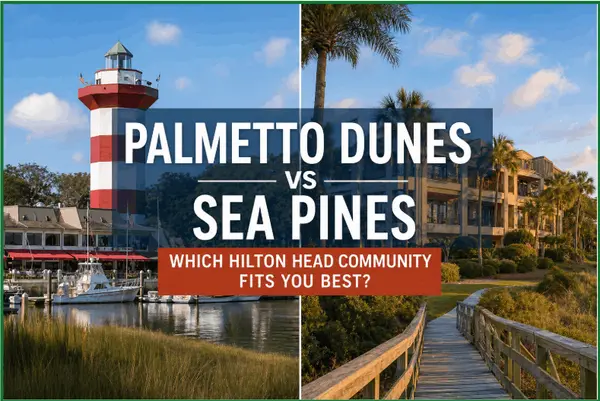
Palmetto Dunes vs Sea Pines: Which Hilton Head Community Fits You Best?
Palmetto Dunes vs Sea Pines: Which Hilton Head Community Fits You Best? Palmetto Dunes and Sea Pines are two of the biggest names in Hilton Head real estate, but they do not offer the exact same ownership experience. That is where buyers sometimes get stuck. Both communities have beach access, golf,

Can You Short-Term Rent a Condo on Hilton Head?
Can You Short-Term Rent a Condo on Hilton Head? Short-term renting a Hilton Head condo can work, but buyers need to verify the Town rules, regime rules, permits, fees, and property-specific limits first. That is the simple answer. The longer answer is where buyers can get into trouble. A lot of peop

Sea Pines Market Report: What Buyers and Sellers Should Know Right Now
Sea Pines Market Report: What Buyers and Sellers Should Know Right Now Sea Pines is still one of Hilton Head’s strongest name-brand communities, but the market is not moving the same way for every property. That is the main story right now. A renovated villa near a strong lifestyle anchor, a Harbour