
Are Hilton Head Beaches Public?
Yes, Hilton Head beaches are public from the ocean to the high-water mark, but beach access is where things get more complicated.
That distinction matters a lot in real estate.
A buyer may hear “public beach” and assume they can easily access the beach from anywhere on the island. A seller may describe a property as “near the beach” and assume buyers understand the access route. A vacation-rental guest may think beach access means parking, restrooms, showers, and a simple walk.
On Hilton Head, the beach itself is public, but the way you get to the beach can vary by property, community, parking situation, and ownership structure.
That is why beach access is not just a lifestyle detail. It affects buyer expectations, condo value, rental appeal, seller marketing, guest convenience, and even how a property should be described online.
The Simple Answer: The Beach Is Public, But Access Is Not Always Simple
The Town of Hilton Head states that the beach is public from the ocean to the high-water mark.
That means the sandy beach itself is public within that area.
But access to the beach can be public, private, gated, resort-controlled, community-controlled, or limited by parking.
That is the part buyers need to understand.
A condo may be close to the beach, but that does not automatically mean the access is easy. A property may be in an oceanfront community, but that does not automatically mean the unit has an ocean view. A home may be in a gated community with beach access, but guests, renters, vendors, and owners may still need to follow specific access and parking rules.
So the real question is not only:
“Is the beach public?”
The better real estate question is:
“How does this property actually access the beach?”
That is where the value difference shows up.
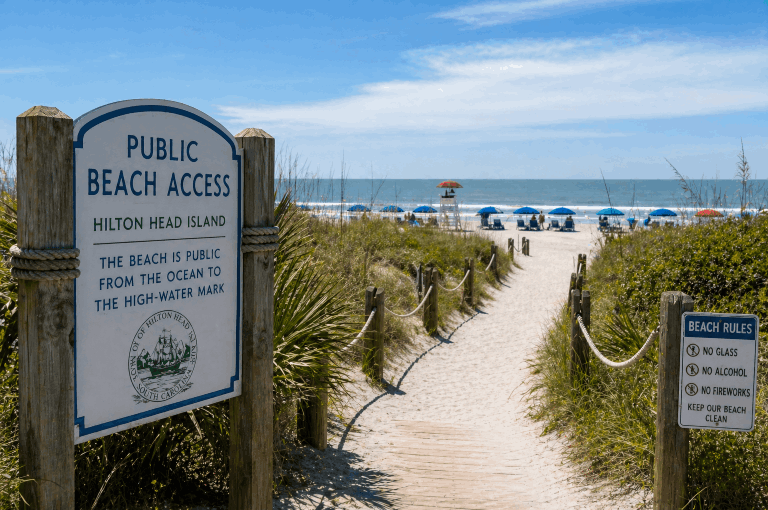
Public Beach Access vs. Community-Controlled Access
Hilton Head has public beach parks and access points such as Coligny Beach Park, Alder Lane, Burkes Beach, Driessen Beach Park, Fish Haul Beach Park, Folly Field Beach Park, and Islanders Beach Park.
These are important because they give the public defined access points to the beach.
But many Hilton Head properties are also located inside private communities, gated resort areas, condo regimes, or controlled-access neighborhoods. In those situations, the beach may still be public, but the access route may be controlled by the community or resort.
That matters in places like Sea Pines, Palmetto Dunes, Shipyard, Port Royal, and other beach-oriented ownership areas.
For buyers, this is why the exact access route matters more than a vague phrase like “beach access.”
You want to know:
- Is the access public or community-controlled?
- Is the route walkable?
- Are there gates or passes involved?
- Is parking available?
- Are there restrooms or showers nearby?
- Can renters or guests use the same access?
- Is the route practical with chairs, coolers, wagons, kids, or older family members?
A property can look perfect online, but if the beach route is awkward, crowded, limited, or misunderstood, that can affect both owner enjoyment and rental guest experience.
Why This Matters for Hilton Head Condo Buyers
For Hilton Head condo buyers, beach access is one of the biggest value drivers.
But not all beach access is equal.
A Forest Beach condo near Coligny may offer strong public beach access and walkability to restaurants, shops, and entertainment. A Palmetto Dunes villa may offer a more resort-controlled beach experience with golf, racquets, biking, and lagoon lifestyle nearby. A Sea Pines property may give buyers access to a classic gated resort environment, but the experience can vary depending on whether the property is near the beach, Harbour Town, South Beach, or an interior golf/residential area.
Folly Field may appeal to buyers who want a more practical beach-access area with condo options and a quieter feel than Coligny. Port Royal may appeal more to buyers who want a quieter, residential, beach-oriented setting rather than heavy short-term rental energy.
The point is simple:
Beach access is not just distance.
It is usability.
Two condos can both be “near the beach,” but one may have a much easier route, better parking, stronger guest convenience, and better rental appeal. The other may be close on a map but less practical in real life.
That difference can affect value.
Be Careful With the Phrase “Private Beach”
In Hilton Head real estate, “private beach” language should be used very carefully.
The safer wording is usually:
- Beach access
- Walk-to-beach
- Near-ocean
- Oceanfront community
- Community beach access
- Gated beach access
- Resort-controlled beach access
- Owner and guest beach access
“Private beach” can be misleading if the beach itself is public but the access route is controlled.
For sellers, this matters because buyers are more educated than ever. If a listing oversells beach access or uses unclear beach wording, buyers may lose confidence once they understand the details.
For buyers, this matters because a phrase like “steps to the beach” or “beach access” should be verified. The actual route, gates, parking, and guest rules are what matter.
Parking Can Change the Whole Beach Experience
Parking is one of the most overlooked parts of beach access.
Some Hilton Head beach parks have paid visitor parking. Some have resident permit parking. Some areas fill quickly during peak season. Some properties rely on walking or biking rather than driving.
This matters for owners, guests, renters, and full-time residents.
If you own a condo in a walkable beach district, parking may not be a big issue because you can walk directly to the beach. If you own farther from the beach, then parking, shuttle options, golf cart rules, bike access, and guest logistics may matter much more.
For rental owners, beach parking can also affect reviews. Guests do not just care that the beach exists. They care whether the beach day is easy.
That is why a smart buyer should verify the actual beach plan before buying.
Beach Rules Matter Too
Hilton Head beach ownership also comes with rules that owners and rental guests need to understand.
Town beach rules cover things like alcohol, glass, littering, beach holes, overnight belongings, dunes, wildlife, fires, fireworks, and other restricted beach uses.
This matters most for short-term rental owners and beach-area sellers.
A well-run rental property should make beach rules clear to guests. That can help avoid fines, complaints, bad reviews, and issues with neighbors or beach patrol.
For sellers, this can actually be part of the property story. If the home or condo has clear guest instructions, easy beach access, good parking guidance, and clean owner/renter rules, that can help buyers feel more confident.
What Buyers Should Verify Before Purchasing
Before buying a Hilton Head beach-area condo, villa, or home, buyers should verify the access details for the specific property.
Key items to review include:
- The exact walking route to the beach
- Whether access is public, gated, resort-controlled, or community-controlled
- Whether renters and guests can use the same access
- Parking availability and current parking rules
- Resident parking permit eligibility, if relevant
- Beach rules and seasonal restrictions
- HOA, POA, or regime rules
- Short-term rental rules, if rental income matters
- Whether the property is oceanfront, near-ocean, walk-to-beach, or simply beach-area
- Whether the unit has an actual ocean view or is just in an oceanfront complex
This is where Hilton Head real estate gets property-specific.
A beach-area property may be a great fit for one buyer and a poor fit for another depending on how the buyer plans to use it.
Questions About Hilton Head Beach Access?
If you are buying a Hilton Head condo, villa, second home, or beach-area property, do not stop at the phrase “beach access.”
Look at the actual route, the rules, the parking, the community, the guest experience, and the way that property fits your ownership goals.
That is especially important if you are comparing Hilton Head condos for personal use, rental use, retirement use, or long-term resale.
If you are looking at a Hilton Head beach-area property and want help understanding the real access, send it over. I can help you look past the listing wording and figure out what the beach experience actually looks like.
FAQ
Are Hilton Head beaches public?
Yes. Hilton Head beaches are public from the ocean to the high-water mark. The more complicated part is access. Some beach access points are public, while others may be gated, private, resort-controlled, community-controlled, or limited by parking and rules.
Does public beach mean I can access the beach from anywhere?
No. The beach itself may be public, but access points are not all the same. Some areas have public beach parks, while other access routes may run through private communities, gated resorts, condo regimes, or controlled-access neighborhoods.
What is the difference between oceanfront and beach access?
Oceanfront usually means the building, complex, or property is directly along the beachfront. Beach access means there is a way to reach the beach. A property can have beach access without being oceanfront, and an oceanfront complex does not always mean the individual unit has an ocean view.
Should Hilton Head sellers say “private beach” in listing copy?
Sellers should be careful with that wording. In many cases, better language is “community beach access,” “controlled beach access,” “resort beach access,” or “owner and guest beach access,” depending on the property. The exact wording should match the actual access rights and rules.
Why does beach access affect condo value?
Beach access affects how buyers and guests use the property. Easy access, walkability, parking, restrooms, showers, view, and community rules can all influence buyer demand, rental appeal, and resale strength.
FROM OUR BLOG

Forest Beach Condo Guide: What Buyers Should Know Before Buying Near Coligny
Forest Beach Condo Guide: What Buyers Should Know Before Buying Near Coligny Forest Beach is one of the most important Hilton Head condo areas for buyers who want beach access, Coligny convenience, and a more walkable island setting. It is also one of the easiest areas for buyers to misunderstand. A
Palmetto Dunes vs Sea Pines: Which Hilton Head Community Fits You Best?
Palmetto Dunes vs Sea Pines: Which Hilton Head Community Fits You Best? Palmetto Dunes and Sea Pines are two of the biggest names in Hilton Head real estate, but they do not offer the exact same ownership experience. That is where buyers sometimes get stuck. Both communities have beach access, golf,
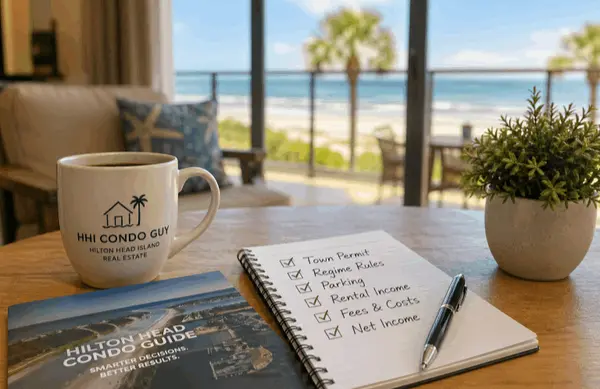
Can You Short-Term Rent a Condo on Hilton Head?
Can You Short-Term Rent a Condo on Hilton Head? Short-term renting a Hilton Head condo can work, but buyers need to verify the Town rules, regime rules, permits, fees, and property-specific limits first. That is the simple answer. The longer answer is where buyers can get into trouble. A lot of peop